 Give Us a Call: (410) 498-8828

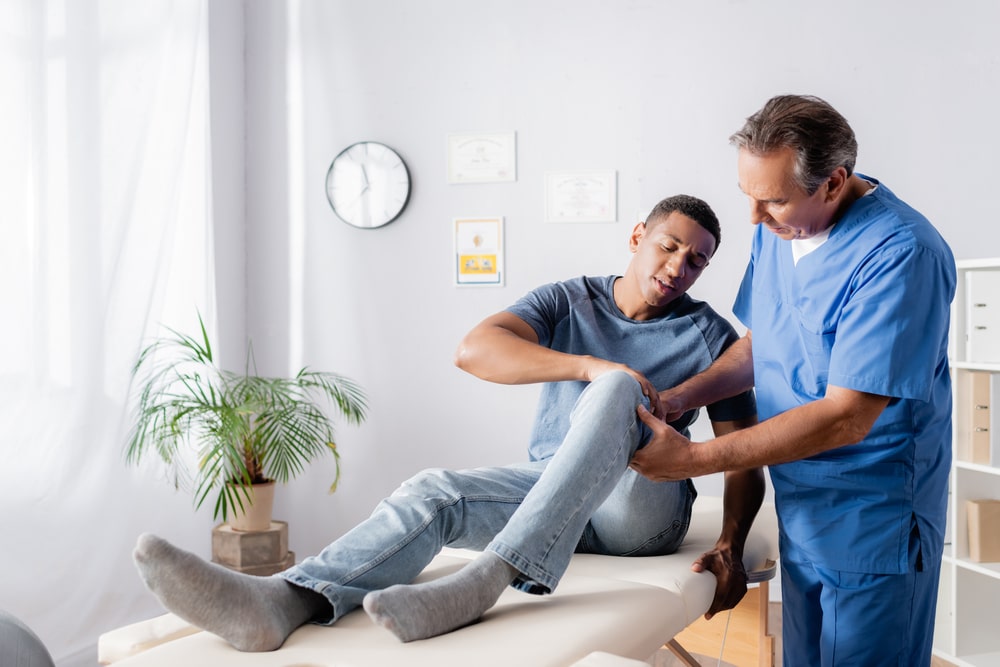
Knee pain treatment from a licensed Doctor of Physical Therapy serving Baltimore, MD patients with more than 17 years of orthopedic rehabilitation experience.
If knee pain is keeping you from walking comfortably, climbing stairs, exercising, or getting through your workday, physical therapy can help you get back to those activities without relying on medication or rushing toward surgery. Dr. Gregory LeMoine has treated knee conditions at LeMoine Physical Therapy since founding the practice in 2007. He holds a Doctorate in Physical Therapy from the University of Maryland School of Medicine and has spent his career focused on outpatient orthopedic rehabilitation. Our Baltimore, MD knee pain treatment begins with a hands-on evaluation to determine what is causing your pain and how to address it. Contact us today to get started and schedule an appointment.
Knee Pain Treatment in Baltimore, MD
The knee is one of the most complex joints in the body, and pain can stem from damaged cartilage, torn ligaments, inflamed tendons, arthritis, muscle weakness, or even problems originating in the hip or ankle.
At LeMoine Physical Therapy, we provide knee pain treatment for patients across Baltimore and the surrounding area. Whether your pain started after an injury, developed gradually, or followed a surgical procedure, our practice builds rehabilitation programs around your specific diagnosis rather than applying a generic protocol.
Knee Pain Treatment Services We Offer in Baltimore
Our Baltimore, MD clinic treats a wide range of knee conditions. Every treatment plan starts with a thorough evaluation so we can pinpoint the problem and build a program that targets it directly.
- Post-Surgical Knee Rehabilitation. Whether you had an ACL reconstruction, a meniscus repair, or a total knee replacement, the weeks and months after surgery determine how well your knee ultimately functions. We guide patients through each phase of recovery, from early range of motion work to full weight-bearing strengthening and functional training.
- Knee Osteoarthritis. The stiffness is usually the first thing patients notice. Then comes the swelling after activity, the ache that lingers into the evening, the stairs that get harder every month. Physical therapy helps manage osteoarthritis symptoms through targeted exercise, manual therapy, and joint protection strategies that slow progression and preserve the function you still have.
- Patellofemoral Pain Syndrome. Often called runner’s knee, this condition produces pain around or behind the kneecap during squatting, stair climbing, or prolonged sitting. Treatment corrects the muscle imbalances and movement patterns that cause the kneecap to track improperly. Runners training for distance events face particular risk for this type of knee pain.
- Ligament Injuries. A plant-and-twist on the field. An awkward landing after a jump. A hit to the side of the knee during a tackle. ACL, MCL, and PCL injuries often happen in a single moment, but rehabilitation takes sustained work to restore stability, rebuild muscle strength around the joint, and retrain safe movement patterns.
- Meniscus Tears. Patients with meniscus tears typically describe catching or locking in the knee, swelling along the joint line, and pain that flares with twisting. How we treat it depends on the severity, but most programs combine manual therapy with progressive strengthening and exercises designed to take stress off the damaged tissue.
- Patellar and Quadriceps Tendonitis. Jumpers, sprinters, and athletes who train on hard surfaces are the most common patients we see with tendon inflammation around the kneecap. Treatment involves structured loading protocols that promote tendon healing while we correct the biomechanical factors that created the problem.
- IT Band Syndrome. That sharp pain along the outside of your knee during a run or a long ride is a familiar complaint for many endurance athletes. The issue is rarely the IT band alone. We address the underlying hip weakness and flexibility deficits that cause friction where the band crosses the knee joint.
- Sports Injury Physical Therapy. Contact sports, running, and court activities all place heavy demands on the knee. Our sports injury programs cover everything from acute sprains to chronic overuse conditions, and the goal is always the same: get you back to your sport without setting you up for the next injury.
Why Choose LeMoine Physical Therapy for Knee Pain Treatment in Baltimore, MD?
Orthopedic Rehabilitation Since 2007
Knee conditions make up a significant portion of what we treat, and they have since the day this clinic opened. Dr. Gregory LeMoine completed his physical therapy education at the University of Maryland School of Medicine, earning his degree in 2002 and his DPT in 2004. He is a licensed physical therapist in Maryland, a member of the American Physical Therapy Association, and recipient of the 2007 Patient’s Choice Award.
Christian Bialek, a licensed Physical Therapist Assistant, works directly with patients during treatment sessions. Christian holds a Bachelor of Science in Exercise Science from Towson University and completed his PTA training at Baltimore City Community College. He and Dr. LeMoine work together to monitor patient progress and adjust treatment as each case evolves.
Our clinic accepts multiple payment and insurance options. Our physical therapy clinic in Baltimore, MD serves patients in the surrounding towns including Rosedale, Dundalk, Essex, and White Marsh.
Baltimore Knee Pain Treatment Infographic
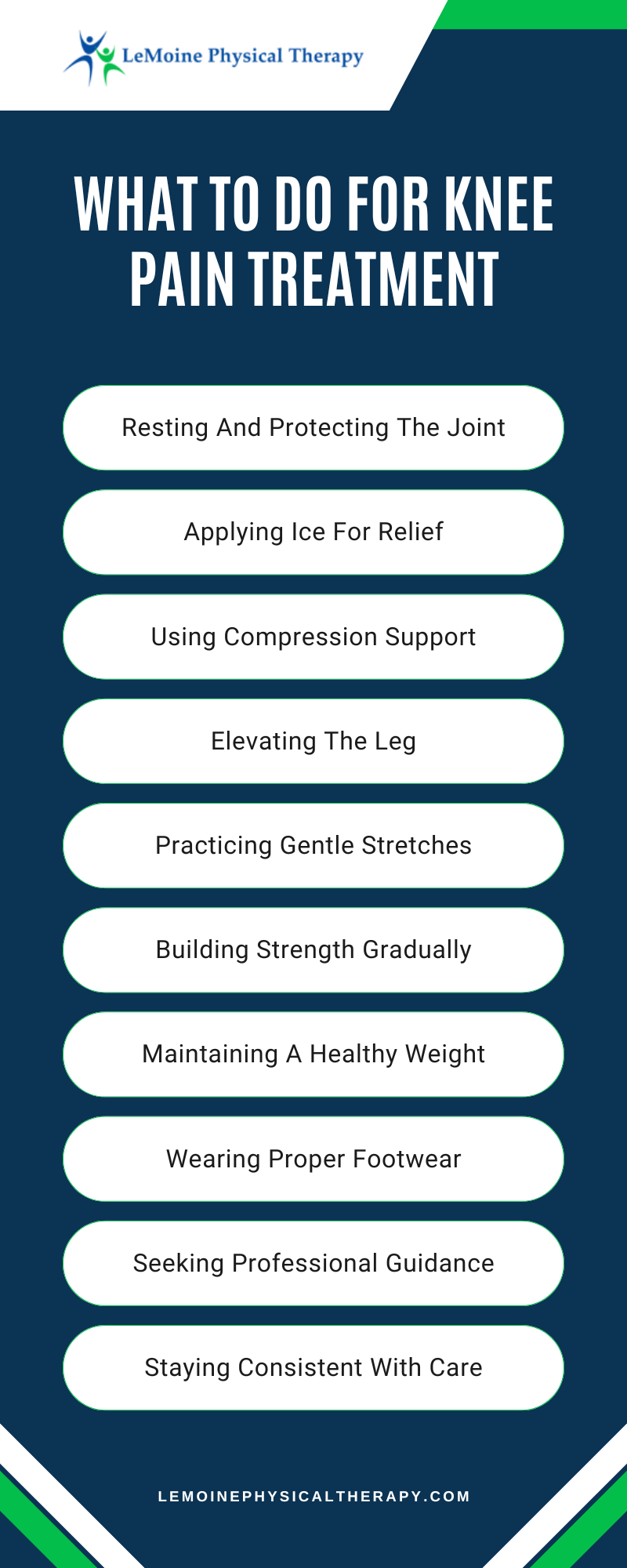
Understanding Knee Pain Treatment
Conditions We Treat and Treatment Options
Knee pain has dozens of potential causes, and each one calls for a different approach. Some patients come in after twisting a knee during a weekend basketball game. Others have dealt with gradually worsening stiffness for months or even years before deciding to seek care. A few of the most common presentations we see in our Baltimore clinic include:
- Pain when walking, climbing stairs, or standing from a seated position
- Swelling, stiffness, or a feeling of instability in the knee joint
- Grinding, clicking, or locking sensations during movement
- Post-surgical pain or limited range of motion after a knee procedure
- Difficulty bearing weight or maintaining balance on one leg
- Pain that developed after a fall, collision, or sudden change of direction
Treatment methods vary depending on the diagnosis. Options typically include therapeutic exercise, manual joint mobilization, soft tissue work, neuromuscular re-education, and kinesio taping. In many cases, the knee itself is not the only area that needs attention. Weakness in the hip or tightness in the ankle can alter how forces travel through the knee, and addressing those areas is often part of an effective treatment plan. Sometimes pain in one joint traces back to a problem somewhere else entirely.
What Should You Expect from Knee Pain Treatment?
If you have not had physical therapy for a knee condition before, here is a general overview of what the process involves at our Baltimore, MD clinic:
- Your first appointment includes a physical evaluation of your knee, testing of the surrounding muscles and joints, and a conversation about your symptoms, activity level, and goals
- Based on the findings, your therapist creates a treatment plan with specific benchmarks tied to the functional activities you want to return to
- Treatment sessions typically combine manual techniques with progressive exercises, and your program is updated as your knee responds
- You will receive a home exercise program to reinforce what happens during your visits and accelerate your recovery between sessions
What Is the Typical Treatment Timeline?
How long knee pain treatment takes depends on the diagnosis and its severity. A mild patellar tendonitis case might resolve in four to six weeks. A post-surgical ACL reconstruction protocol often runs four to six months or longer. Here is a general structure:
- Your initial evaluation establishes baseline measurements for range of motion, strength, swelling, and pain
- Early treatment prioritizes pain management, swelling reduction, and restoring basic knee motion
- As pain decreases, the focus shifts to progressive strengthening and functional movement retraining
- Later phases introduce sport-specific or job-specific activities, depending on what you need to return to
- Your therapist transitions you to a maintenance program and, when appropriate, clears you for a full return to activity
Timelines are not fixed. Your therapist adjusts the plan based on how your knee responds, and setbacks are a normal part of the process for more complex injuries. Patients who follow their home rehab exercises consistently tend to progress faster.
What Should You Bring to Your First Visit?
Here is what to have with you for your first visit:
- Insurance card, photo ID, and a physician referral if your plan requires one
- Any imaging results such as X-rays or MRI reports related to your knee
- A current medication list and notes on previous treatments you have tried for your knee condition
Wear shorts or loose-fitting pants so your therapist can examine your knee without restriction. Plan to arrive a few minutes early to complete your intake forms.
What Are Some Important Maryland Physical Therapy Resources?
If you want to verify a therapist’s credentials, research knee conditions, or review treatment guidelines from independent sources, these are useful starting points:
- Maryland PT licensing board. The state board that licenses physical therapists and physical therapist assistants in Maryland and provides tools for credential verification.
- NIH knee injury resources. MedlinePlus, a service of the National Institutes of Health, provides research-backed information on common knee injuries and disorders including ACL tears, meniscus damage, and osteoarthritis.
- NIAMS osteoarthritis information. The National Institute of Arthritis and Musculoskeletal and Skin Diseases publishes detailed information on osteoarthritis causes, symptoms, and current treatment approaches.
These resources are informational and do not replace an in-person evaluation by a licensed physical therapist.
Contact LeMoine Physical Therapy
Knee pain that goes untreated tends to get worse, not better. Compensating for a painful knee changes how you walk, which puts stress on your hips, your back, and your other knee. If you are dealing with a knee injury, recovering from surgery, or managing a condition like osteoarthritis, an initial evaluation is the first step toward finding out what is wrong and how to fix it.
Dr. Gregory LeMoine and the team at LeMoine Physical Therapy provide knee pain treatment in Baltimore, MD built around each patient’s diagnosis, activity level, and recovery goals. Contact us to schedule your appointment.
Knee Pain Statistics in Baltimore
 Osteoarthritis is the most frequent form of arthritis, and it affects 33 million adults in this country. The knee carries much of that load. One research review ties a large share of the world’s osteoarthritis disability to knee osteoarthritis, with prevalence climbing sharply after age 60. Baltimore is no exception. In a metro area full of runners, weekend athletes, and people on their feet all day, knee complaints turn up at every age. Some start with a single bad step. Many build slowly, over years. Whatever the cause, most respond to conservative care before surgery becomes necessary, and that is where physical therapy earns its place, treating the pain and the mechanics behind it.
Common Causes of Knee Pain
The knee is a workhorse, and a lot can go wrong with it. Pain rarely has one tidy source, but a handful of causes account for most of what we see. None of them work in isolation, either; most sore knees hurt for more than one reason at once. Here are the common ones, and why they land people in physical therapy.
- Acute injury. Some knee injuries happen in a single instant: a plant-and-twist on the field, a bad landing, a collision. Ligament sprains, meniscus tears, and kneecap dislocations fall into this group. The pain and swelling usually come on fast, and the knee may feel unstable or give way underneath you. These are the injuries that bring athletes into sports injury therapy, and they usually need structured rehab to rebuild stability, not just rest.
- Osteoarthritis. The cartilage that cushions the joint wears down over time. The result is stiffness, swelling, and an ache that gets worse with activity and eases with rest, at least early on. It is the most common source of chronic knee pain in older adults. Our approach to osteoarthritis treatment leans on exercise and joint protection to keep you moving.
- Overuse. Repeat the same motion often enough and the tissue protests. Runners, cyclists, and workers who squat or kneel all day develop tendon and cartilage irritation that builds gradually. Much of this falls under orthopedic physical therapy, which targets the mechanics driving the overload. Cutting back is only half the answer; the other half is fixing why the tissue got overloaded to begin with.
- Muscle weakness and imbalance. Weak hips and quads let the kneecap drift off track, and that friction shows up as pain around the front of the knee. Runners and desk workers alike are prone to this, since long hours in one position let key muscles switch off. Strengthening the muscles that support and steer the joint is often the fix.
- Problems above and below the knee. The knee sits in the middle of a chain. Tight ankles or weak hips change how force travels through the leg, and the knee absorbs what those joints don’t. It is why hip and foot problems so often surface as knee pain, and why the strain can travel on to the lower back.
- Age and wear. Decades of walking, working, and playing add up. Tissue loses some of its resilience, and old injuries resurface. Staying strong and mobile is the best defense against that everyday toll, and physical therapy helps older adults stay active without defaulting to surgery.
- Excess load on the joint. Every extra pound of body weight multiplies the force on the knee with each step. Carrying more weight speeds up cartilage wear and makes existing pain harder to settle. Even modest weight loss can noticeably reduce knee pain for many people, and managing that load through movement and strength takes pressure off the joint.
Baltimore Knee Pain Treatment FAQs
Do I need a referral to start knee physical therapy?
In Maryland, you can begin physical therapy without a physician referral, though some insurance plans require one for coverage. It is worth a quick call to your insurer before your first visit. If your plan does need a referral, your primary care doctor or orthopedist can provide it. We are glad to help you sort out what your specific plan requires so you can get started without a delay. Bring any paperwork your plan needs to the first visit so we can begin treatment right away.
How much does knee pain treatment cost?
Cost depends on your insurance, your plan’s deductible, and how many visits your condition needs. We accept multiple insurance plans and offer payment options for patients paying out of pocket. During your first visit, we can give you a realistic sense of how many sessions a knee like yours usually takes, so there are fewer surprises down the road.
Can physical therapy help me avoid knee surgery?
Often, yes. Many knee conditions, including arthritis, patellar tendonitis, and some meniscus tears, respond well to conservative care. Building strength around the joint and correcting how you move can reduce pain enough that surgery becomes unnecessary. It doesn’t work in every case, and we will tell you honestly if we think you need a surgical opinion. But therapy is a reasonable first step for most knee pain.
How soon will my knee feel better?
That depends on what’s wrong. A mild case of runner’s knee might settle in a few weeks, while recovery from an ACL injury can run several months. Most patients notice some improvement within the first few weeks of consistent work. Your therapist tracks your progress and adjusts the plan as your knee responds, rather than holding you to a fixed schedule.
Do you treat knee arthritis?
Yes. Knee osteoarthritis is one of the most common conditions we see. We can’t reverse the cartilage loss, but targeted exercise, manual therapy, and joint-protection strategies can ease the pain, improve your range of motion, and slow how fast the condition limits you. A serious knee injury like an ACL tear can also lead to arthritis later on, which makes early rehab worth the effort.
Can you help athletes with knee injuries?
Absolutely. Knee injuries are common in cutting and jumping sports, and we build return-to-sport programs that rebuild strength and control before you go back to play. Whether you tore a ligament or you’re managing chronic pain, our Baltimore sports therapy programs aim to get you back without setting up the next injury.
How is knee therapy different from just resting it?
Rest can calm a flare, but it rarely fixes the cause, and a knee that sits idle tends to get weaker. Physical therapy restores strength, motion, and control in a structured way, so the joint can handle real life again. When a limp has set in, gait rehabilitation retrains how you walk, which keeps the limp from creating new problems elsewhere. The goal is a knee that holds up under real use, not one that only feels fine while you avoid using it.
Local Information for Baltimore Knee Pain Cases
Most Dangerous Sports for Serious Knee Injuries
Not every sport stresses the knee equally. The injuries that end seasons, torn ligaments especially, cluster in sports built on cutting, pivoting, and hard landings. Research on college athletes found the highest ACL injury rates in men’s football and, among women, in lacrosse, soccer, and basketball.
A broader review points to football, soccer, and gymnastics as some of the highest-risk sports, with female athletes tearing their ACLs at markedly higher rates than men in comparable sports. That matters in Maryland, where lacrosse is close to a religion and youth soccer and basketball fill the fields and gyms year-round. Athletes in these sports benefit from the strength and landing mechanics that physical therapy for sports works on.
What Are Important Local Resources for Baltimore Knee Pain Treatment?
Beyond physical therapy, Baltimore has strong orthopedic and rehabilitation resources for more complex knee problems. If you need imaging, a surgical opinion, or specialized care, these institutions are worth knowing.
- MedStar Union Memorial Hospital, 201 E. University Parkway, (410) 554-2000. Home to the MedStar Orthopaedic Institute and the country’s first hospital-based sports medicine program, with dedicated hip and knee care.
- University of Maryland Rehabilitation & Orthopaedic Institute, 2200 Kernan Drive, (410) 448-2500. Maryland’s leading orthopedic rehabilitation hospital, with a joint replacement center and orthopaedic therapy services.
- Johns Hopkins Orthopaedic Surgery, 601 N. Caroline Street, (443) 997-2663. Orthopedic and sports medicine care, including hip and knee specialists, on the Johns Hopkins Hospital campus.
LeMoine Physical Therapy is not affiliated with these organizations and does not endorse them. They are listed only as a convenience for patients seeking additional Baltimore resources.
About LeMoine Physical Therapy
Dr. Gregory LeMoine has built LeMoine Physical Therapy into a Baltimore practice where knee care is a core focus, from arthritis and tendon problems to recovery after surgery. Over nearly two decades, the practice has helped a large number of patients return to walking, working, and sport without leaning on medication or an operation. Knee treatment is one part of our broader physical therapy in Baltimore, MD services.
What Our Clients Say
★★★★★
“Gregory LeMoine is the best physical therapist I’ve ever had. He was referred to me by an excellent Orthopedic surgeon. He is highly skilled, easy to be around and talk to. The exercises he prescribes are the best and most effective. His support staff is friendly, well trained and professional. He gives the best massage ever!My knee pain has lessened alot. He is intensifying the treatment of my back because he always adjusts his care according to the needs .I would recommend him to anyone who is looking for an excellent physical therapist and team.”
Joan Sweeney
Read more reviews on our Google Business Profile.
Contact LeMoine Physical Therapy
Knee pain rarely improves by waiting it out, and the longer you compensate, the more the rest of your body pays for it. If you’re dealing with an injury, recovering from surgery, or managing arthritis, an evaluation is the place to start. We accept most major insurance plans and offer payment options for patients without coverage. Most new patients are seen within a few days, and the first visit includes a hands-on assessment and a plan built around your knee. Contact us to schedule your knee pain evaluation in Baltimore.